A soggy yard after a storm might seem like a minor inconvenience, but drainage problems rarely stay small. Left unchecked, standing water can undermine your foundation, kill landscaping, and lead to costly structural repairs down the road. Knowing how to spot the warning signs early can save you thousands of dollars and a lot of frustration. This guide walks through the key indicators that your yard’s drainage issue is worsening and what each one might mean for your property.
Standing Water That Lingers Longer After Every Rain
One of the clearest signs of a worsening drainage problem is water that takes longer to disappear after each rainfall. If puddles that once cleared within a few hours now stick around for a day or two, the soil underneath is likely becoming compacted or saturated beyond its capacity. This is often the first visible clue that something below the surface has changed, whether it’s soil composition, grading, or a blocked outlet somewhere on the property.
Tracking how long water sits can help you determine whether the issue is getting worse over time. Keep a simple log of rainfall amounts and how long puddles persist so you can spot patterns.
- Puddles lasting more than 24 hours after moderate rain
- Water pooling in new areas that were previously dry
- Grass turning yellow or dying in consistently wet spots
- Mosquito activity increasing near standing water
Foundation Cracks and Basement Moisture Increasing
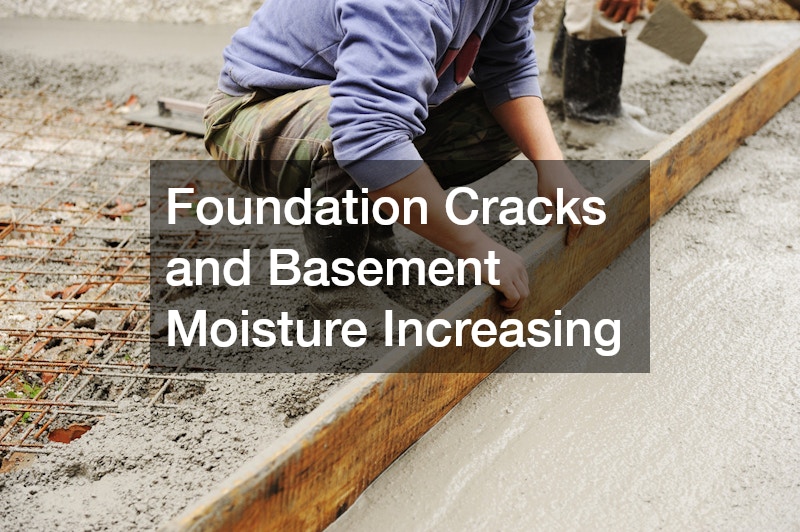
When yard drainage fails, water often finds the path of least resistance, which is frequently toward your home’s foundation. Poor grading, clogged gutters, or saturated soil can all redirect runoff straight into your foundation walls instead of away from them. Over time, this constant exposure puts pressure on materials that were never designed to hold back standing water.
If you notice new hairline cracks in your foundation walls or a musty smell developing in the basement, this is a strong indicator that runoff is no longer being directed away from the house properly. Cracks wider than 1/8 inch, or ones that seem to grow month over month, are especially worth flagging. Efflorescence, the chalky white residue that appears on concrete or brick, is another telltale sign that moisture is actively moving through your foundation walls.
These issues tend to escalate quickly once water starts seeping into foundation walls repeatedly. What begins as a faint musty odor can turn into visible mold growth, peeling paint, or a damp basement floor within a single wet season. Left unaddressed, hydrostatic pressure from waterlogged soil can widen cracks further, potentially leading to bowing walls or costly structural repairs down the road.
Foundation cracks that widen over time, along with musty odors, damp walls, or visible water stains in the basement, are signs that a drainage issue has moved beyond a minor nuisance. These symptoms often show up gradually, so tracking changes with photos or measurements can help you spot patterns before the damage becomes severe.
Addressing this early often requires more than patching cracks. A professional evaluation of local grading around your home can determine whether the slope of your property is pushing water toward the foundation instead of away from it, which is a common root cause of ongoing moisture problems.
As a general rule, the ground should slope away from your foundation at a rate of about 6 inches over the first 10 feet. If your local grading falls short of that benchmark, water has little choice but to pool near the base of your home and eventually seep through vulnerable points.
Other contributing factors are worth checking at the same time, including clogged gutters, downspouts that discharge too close to the house, and soil that has settled or eroded near the foundation. Correcting these issues together, rather than one at a time, gives you a more complete and lasting solution.
Erosion Patterns Reshaping Your Landscape
Erosion is another telltale sign that drainage conditions are deteriorating rather than staying stable. Small channels or grooves cutting through your lawn, mulch beds, or flower borders suggest that water is moving with enough force to carry soil away. Over time, this can expose plant roots, undermine walkways, and create uneven surfaces that are both unsightly and hazardous.
If erosion is happening on a slope, the problem tends to compound because each rain event carves the channels deeper. Homeowners dealing with significant slope erosion sometimes need retaining walls installed to slow water movement and hold soil in place, especially on properties with steep grades or hillside landscaping.
- Visible dirt trails or grooves after rainfall
- Mulch or gravel washing into driveways or streets
- Exposed roots on trees or shrubs
- Sinking or uneven patches in the lawn
Tree and Shrub Health Declining Near Wet Areas
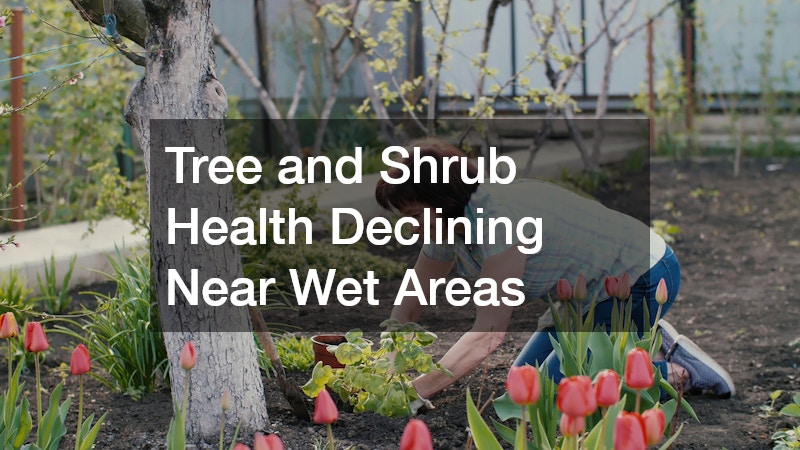
Plants are often the first living indicators that something is wrong beneath the surface. Trees and shrubs sitting in consistently saturated soil can develop root rot, which shows up as yellowing leaves, stunted growth, or branches dying back from the tips. Bark that appears darkened or soft near the base, and a general thinning of the canopy, are additional warning signs worth watching for.
Certain species tend to struggle faster than others in waterlogged conditions. Maples, dogwoods, and most fruit trees are particularly sensitive to standing water and may show stress within a single wet season, while willows and river birch can tolerate soggy soil for much longer before symptoms appear. If a moisture-tolerant tree starts declining, that’s often a stronger signal that drainage has crossed a threshold rather than just being a bit worse than usual.
If several plants in the same area are struggling simultaneously, poor drainage is a likely culprit rather than disease or pests alone. A useful check is to dig down six to eight inches near the affected roots a day or two after rainfall; soil that’s still muddy or emits a sour, sulfur-like smell points to oxygen-starved, waterlogged conditions rather than a localized plant issue. Comparing the struggling area to unaffected parts of the yard can also help confirm whether drainage, not disease, is the common thread.
Persistent standing water suffocates roots by depriving them of oxygen, and once root rot sets in, the damage is often irreversible. Warning signs include mushrooms growing at the base of the trunk, bark that peels away easily, or a noticeable lean that wasn’t there before. Trees showing these symptoms should be evaluated promptly, since decay can progress faster than most homeowners expect.
In severe cases, a tree that has been sitting in waterlogged soil for an extended period may become structurally unstable and pose a safety risk. When root systems rot significantly, tree removal may become necessary to prevent the tree from falling during a storm, particularly if it’s located near a home, driveway, or power line.
A certified arborist can help determine whether a struggling tree can be saved through improved drainage and root treatment, or whether removal is the safer option. Waiting too long to act increases both the cost and risk, since a compromised tree near a structure can cause thousands of dollars in damage if it topples unexpectedly. Addressing the underlying drainage issue is just as important as dealing with the tree itself, or nearby plants will eventually face the same fate.
Water Intrusion Around Roofing and Gutters
Drainage problems don’t always originate at ground level. Clogged or poorly angled gutters can dump excessive water into concentrated areas of your yard, overwhelming the soil’s ability to absorb it. If you notice water pouring over gutter edges during storms or pooling directly beneath downspouts, your roof drainage system may be contributing to the yard’s larger problem.
It’s worth having your roof inspected alongside your yard, since the two systems often work together to manage water flow. Roofing companies can evaluate whether your gutters, downspouts, and roof valleys are directing water where it needs to go, or whether adjustments are needed to reduce runoff concentration in vulnerable areas.
Damage to Roofing Materials from Prolonged Moisture
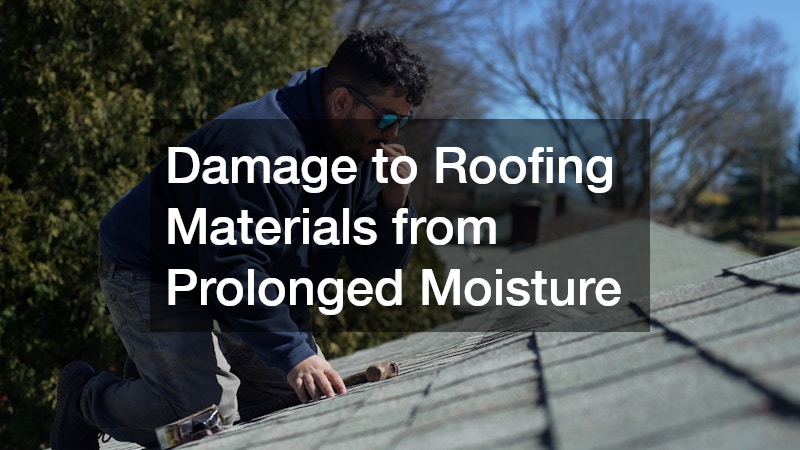
Good roofing contractors will tell you that beyond gutters, the roof itself can suffer when drainage issues persist, especially if water backs up or pools near the roofline due to poor grading or clogged systems. Shingles that stay damp for extended periods can curl, crack, or grow moss, which shortens their lifespan considerably. This is particularly common in areas where tree cover keeps sections of the roof shaded and slow to dry.
If you notice granules collecting in gutters or dark streaks forming on your roof, it may be time to call a roof repair service before minor damage turns into a full replacement. Catching these issues early often costs far less than waiting until leaks develop inside the home.
- Moss or algae growth on shaded roof sections
- Shingle granules accumulating in gutters
- Sagging areas along the roofline
- Water stains appearing on interior ceilings
Interior Wall and Paint Damage from Rising Moisture
When drainage problems get bad enough, moisture can wick up through foundation walls and affect the interior finishes of your home. Bubbling paint, peeling wallpaper, or a chalky white residue on basement walls are all signs that water is intruding where it shouldn’t be. These symptoms often appear months after the original drainage issue began, making it easy to overlook the connection.
Fixing the surface damage without addressing the underlying moisture source is a temporary solution at best. Many homeowners bring in painters only to see the same staining return within a year because the actual water problem in the yard was never resolved.
Structural Settling in Patios, Walkways, and Retaining Features
Hardscaping elements like patios, walkways, and steps rely on stable, well-draining soil beneath them. When drainage worsens, that soil can shift, settle, or wash out, causing pavers to sink, crack, or separate at the seams. This kind of movement usually starts subtly, with slight unevenness that becomes more pronounced after each significant rain.
If you’re noticing shifting stonework or gaps forming in brick or block features, it’s worth consulting a masonry company to assess whether the foundation beneath these structures needs to be rebuilt or better drained. Ignoring this can lead to more extensive and expensive repairs later, especially if the settling spreads to nearby structures.
Outdoor Living Spaces Showing Warping or Instability

Decks and other outdoor structures are also vulnerable when yard drainage deteriorates, particularly if support posts sit in soil that stays wet for extended periods. Wood posts exposed to constant moisture can rot from the inside out, weakening the entire structure even if the surface boards still look fine. Metal fasteners and hardware can also corrode faster in consistently damp conditions.
If you’re planning a deck installation on a property with known drainage challenges, addressing the water issue first is essential to protect your investment long term. Building on unstable or poorly drained ground often leads to premature repairs regardless of how well the deck itself is constructed.
Recurring Repairs Signaling a Larger Property-Wide Issue
Sometimes the clearest sign of a worsening drainage problem isn’t one dramatic event but a pattern of small repairs that keep happening. If you find yourself repeatedly patching foundation cracks, replacing mulch that washes away, or fixing the same soggy patch of lawn, these recurring issues point to a systemic problem rather than isolated incidents. Treating symptoms individually without addressing the source rarely provides lasting relief.
- Multiple contractors called for different but related issues
- Repairs that only last a season or two
- Increasing water bills from irrigation compensating for dead grass
- Growing frustration with unexplained moisture in different areas
At this stage, it often makes sense to take a broader view of the property rather than continuing to address individual symptoms. Some homeowners find that a larger home remodeling project, one that incorporates updated grading, drainage systems, and hardscaping together, ends up being more cost-effective than years of piecemeal fixes.
Recognizing these warning signs early gives you the chance to address drainage problems before they escalate into major structural or financial headaches. Whether the issue shows up as lingering puddles, foundation cracks, or damage to your deck and roofline, each symptom is worth investigating rather than ignoring. Start by observing your yard closely after the next rainfall and documenting where water collects, lingers, or causes visible damage. From there, you’ll be better equipped to decide which professionals to consult and how urgently action is needed.